Dolmabahce Harem Guide - Private Rooms, Atmosphere, and Context
Explore the private side of Dolmabahce Palace in the Harem section and discover how domestic space contrasts with formal imperial ceremony.
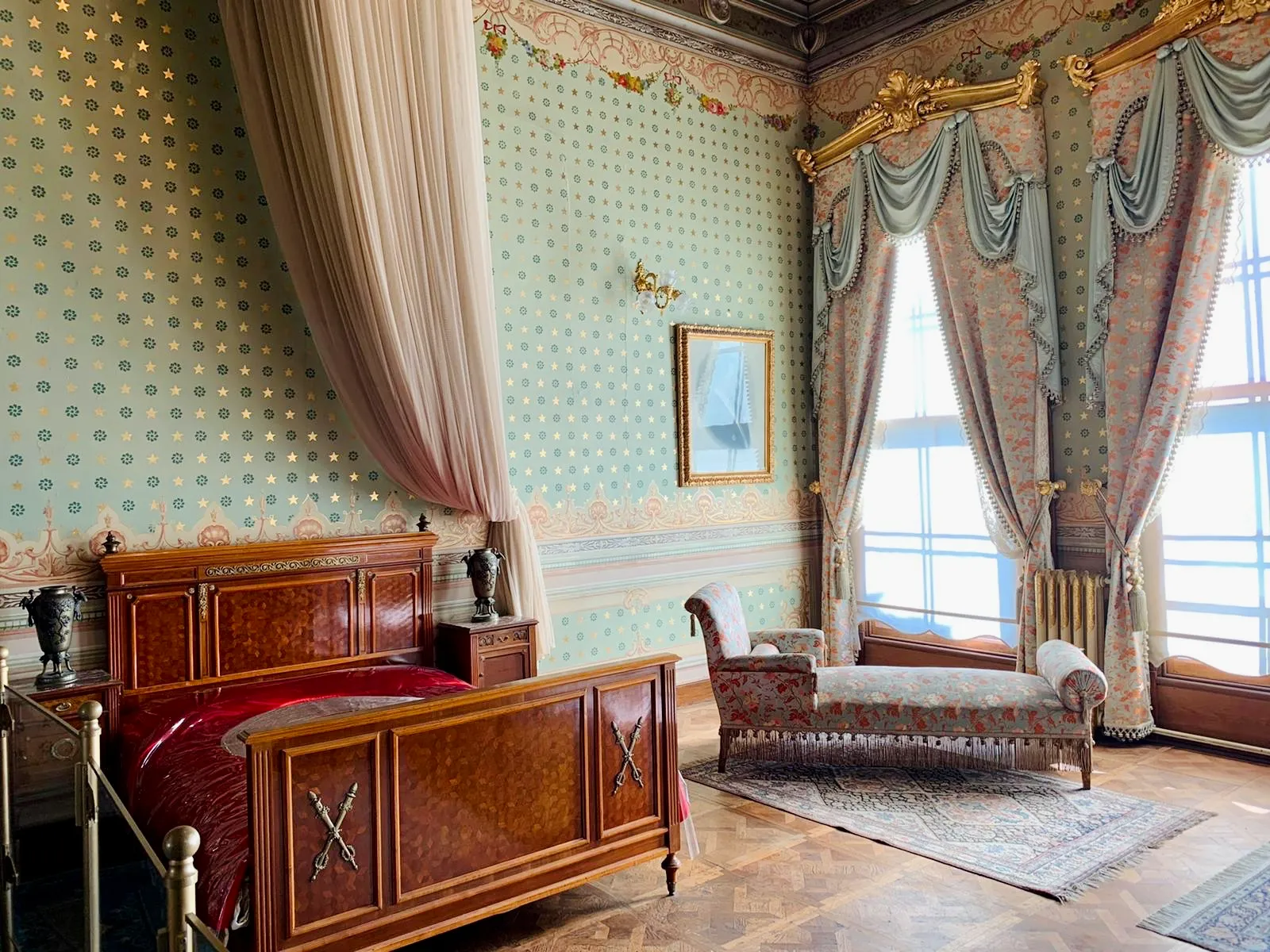
After the monumental state rooms, the Harem feels like a lowered voice. The scale softens, corridors narrow, and rooms begin to speak in daily rhythms instead of diplomatic declarations.
Why this section matters
- It reveals palace life beyond ceremony.
- It shows how hierarchy shaped movement and privacy.
- It adds emotional balance to the visit.
Public vs private at a glance
| Feature | State rooms | Harem |
|---|---|---|
| Purpose | Representation | Daily life |
| Scale | Monumental | Intimate |
| Atmosphere | Formal | Personal |
Suggested slow-walk prompts
- How does light enter each room differently?
- Which details feel practical, not ceremonial?
- Where does quiet seem intentional?
Nested reflection:
A palace can project power.
A home, even inside a palace, still needs comfort.
Visitor note
- Keep your pace slower than in the main halls.
- Focus on transitions between rooms.
- Save one final look back before exiting.
The Harem does not compete with the Ceremonial Hall; it completes it. Together, they tell the full grammar of Dolmabahce: authority in public, humanity in private.
Reading the private narrative
In the Harem, detail replaces spectacle. Doors, textiles, and room-to-room transitions become the primary storytellers.
What changes in your experience
- You stop scanning and start observing.
- You compare gestures of comfort instead of gestures of power.
- You understand that palace life included routine, not only ceremony.
A small reflective exercise
- Pick one room that feels formal and one that feels personal.
- Write one sentence for each: "This room wants me to feel..."
- Compare both sentences before exiting the section.
In many historic sites, private spaces are where empathy enters the historical narrative.
By integrating this quieter chapter into your visit, you leave with a fuller, more human understanding of Dolmabahce—one that extends beyond imperial display into lived daily texture.
Tentang penulis

Istanbul Heritage Desk
Panduan ini ditulis untuk pelancong yang menginginkan lebih dari sekadar berhenti cepat untuk foto. Dolmabahçe membutuhkan konteks: kisah reformasi, seremoni, kemunduran, dan pembaruan yang membentuk abad terakhir kekuasaan Utsmaniyah serta meninggalkan warisan arsitektur luar biasa di Bosphorus.
Tags
Comments (0)
Loading comments...