Dolmabahce Gates and Entrance Design - Sultan's Gate, Thresholds, and Route
Learn how Dolmabahce's gates and approach sequence shape first impressions through architecture, symmetry, and ceremonial urban choreography.
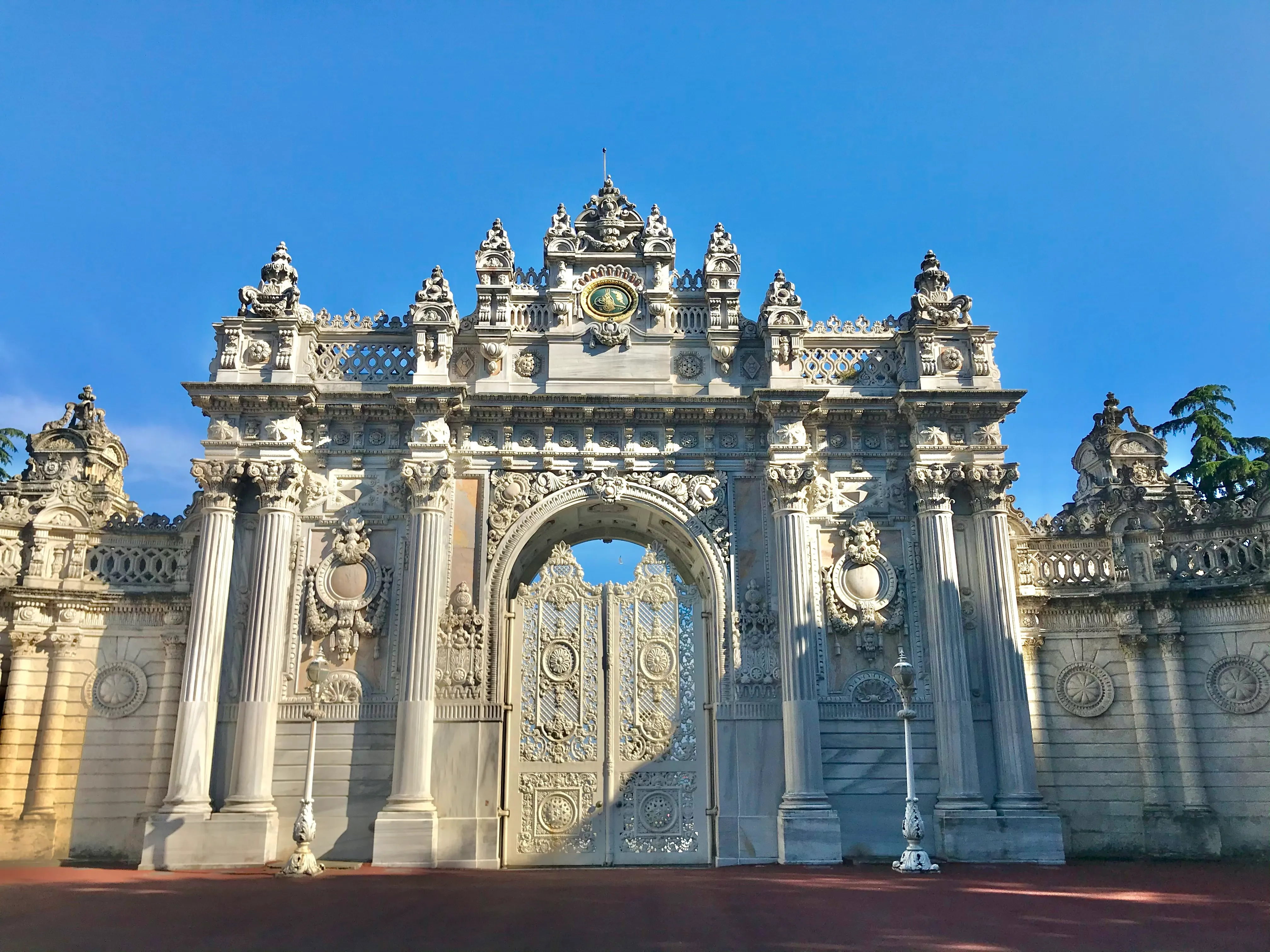
At Dolmabahce, the visit begins before the ticket scan. It begins at the gate.
Threshold design, step by step
- Distant view: skyline silhouette and symmetry.
- Mid-distance: ornament reveals status language.
- Near approach: human scale returns through doorways and paths.
Why gates matter
- They stage transition from city tempo to court tempo.
- They compress and release movement to build anticipation.
- They frame the palace as both fortress and invitation.
Best photo windows
| Spot | Time | Visual mood |
|---|---|---|
| Sultan's Gate | Morning | Crisp, graphic stone details |
| Waterfront edge | Late afternoon | Warm reflections |
| Night lighting zones | Blue hour | Dramatic contrast |
flowchart LR
  A[Street Rhythm] --> B[Gate Threshold]
  B --> C[Ceremonial Axis]
  C --> D[Interior Grandeur]
If the palace interior is a symphony, the gate is the overture.
Take ten minutes outside before rushing in. Those minutes make every interior room easier to read.
Extended threshold narrative
The approach to Dolmabahce works like a deliberate transition chamber. You arrive from traffic, noise, and speed, then move through ornament, alignment, and controlled perspective.
Three things to observe before entry
| Element | What to notice | Why it matters |
|---|---|---|
| Gate ornament | Density and hierarchy of detail | Signals status before words |
| Axis alignment | Directional pull toward interior | Guides body movement ritualistically |
| Framing edges | How views open and close | Controls anticipation |
Micro-itinerary (outside only)
- Stand at a distance and read overall geometry.
- Walk closer and isolate one decorative zone.
- Move to the side and compare symmetry vs depth.
Before entering the palace, let the gate teach you how to look.
If you perform this short exercise, the first interior rooms become easier to decode because you have already tuned into Dolmabahce's language of sequence and emphasis.
著者について

Istanbul Heritage Desk
このガイドは、短時間の写真撮影だけで終わらせたくない旅行者のために書かれています。ドルマバフチェは、改革、儀礼、衰退、再編という文脈の中でこそ深く理解できます。そこには、オスマン帝国最後の一世紀を形づくった力学と、ボスポラスに刻まれた特別な建築遺産が凝縮されています。
Tags
Comments (0)
Loading comments...