Dolmabahce Hidden Details - Symbols, Motifs, and Visual Guide
Learn to identify symbolic motifs and subtle details in Dolmabahce Palace for a deeper, more rewarding visit.
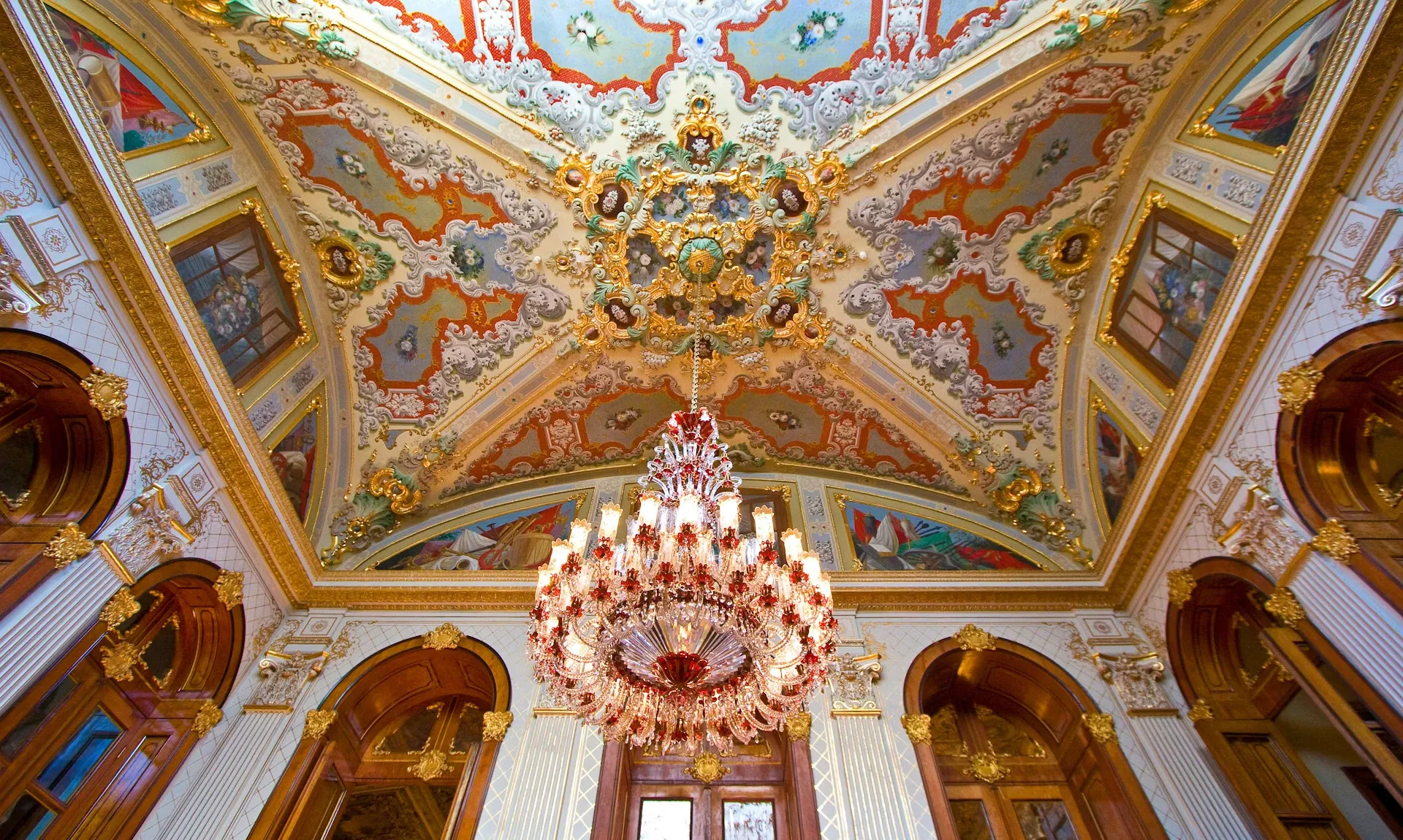
Most visitors remember Dolmabahce as "grand." Fewer can explain why. The answer often lies in repeated details that quietly teach your eye how to read the palace.
Motif hunt list
- Floral forms and scrolling borders
- Repeating geometric rhythm in frames
- Light-catching crystal placements
- Material contrast between soft and hard surfaces
Symbol reading table
| Detail type | Immediate effect | Deeper cue |
|---|---|---|
| Repetition | Order | Institutional confidence |
| Gilded accents | Luxury | Intentional status signaling |
| Framing devices | Focus | Narrative control |
Exercise: 3-2-1 method
- Identify 3 repeated patterns.
- Compare 2 rooms with different mood.
- Write 1 sentence on what the palace wants you to feel.
You are not just looking at decor. You are reading communication.
Short formula:
Pattern + Placement + Context = Meaning
Once you start noticing motifs, Dolmabahce stops being a blur of luxury and becomes a coherent visual language.
Advanced motif-reading layer
After your first pass through the palace, revisit one room mentally and ask: which elements were repeated, which were singular, and which were strategically placed?
Pattern hierarchy model
| Pattern level | Description | Likely function |
|---|---|---|
| Primary | Highly visible repeated motifs | Establish order and identity |
| Secondary | Localized decorative accents | Modulate room mood |
| Tertiary | Subtle transition details | Guide gaze and movement |
Practical revisit method
- Choose one photo you took.
- Mark three repeated forms in it.
- Describe how those forms affect your eye path.
Visual literacy turns decoration into data.
This second-layer reading is where many visitors move from "impressed" to "informed"—a shift that makes Dolmabahce stay meaningful long after the trip.
著者について

Istanbul Heritage Desk
このガイドは、短時間の写真撮影だけで終わらせたくない旅行者のために書かれています。ドルマバフチェは、改革、儀礼、衰退、再編という文脈の中でこそ深く理解できます。そこには、オスマン帝国最後の一世紀を形づくった力学と、ボスポラスに刻まれた特別な建築遺産が凝縮されています。
Tags
Comments (0)
Loading comments...