Dolmabahce Architecture Guide - Ottoman and European Design Fusion
Understand Dolmabahce's architectural fusion through facade rhythm, interior ornament, and ceremonial spatial planning.
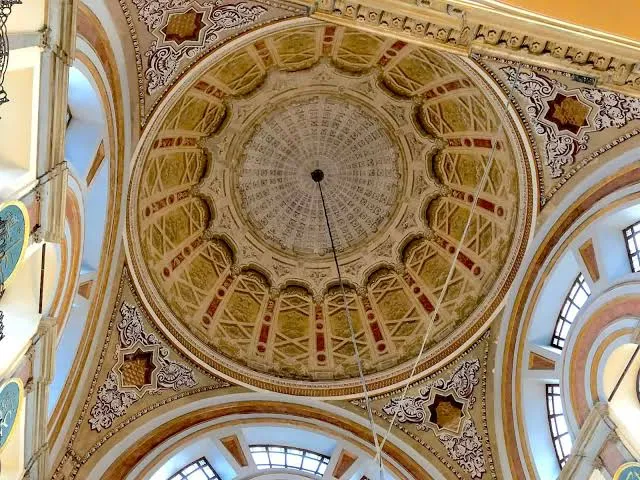
Dolmabahce is often described as a blend. That word is true, but incomplete. This palace is not a collage; it is an edited grammar where styles are translated into state language.
Three layers to read
Layer 1: Exterior order
- Rhythm and symmetry anchor the waterfront identity.
- Repetition creates ceremonial stability.
Layer 2: Interior ornament
- Ceilings, crystal, and gilded motifs amplify movement of light.
- Ornament acts as hierarchy, not mere decoration.
Layer 3: Processional routes
- Movement from gate to hall encodes protocol.
- Spatial expansion mirrors political theatre.
Comparative matrix
| Question | Ottoman continuity | European influence |
|---|---|---|
| Court protocol | Strong | Adapted presentation |
| Facade logic | Ceremonial axis | Neoclassical discipline |
| Interior effect | Symbolic richness | Baroque drama |
Architecture here is less about choosing sides and more about composing legitimacy.
Reading key:
See the plan -> feel the scale -> decode the symbolism
If you visit with this lens, every corridor becomes legible: not random luxury, but narrative strategy in stone and light.
Deeper architecture reading framework
To enrich your visit, treat each room as a sentence and each transition as punctuation.
- Facades = opening thesis
- Halls = argumentative emphasis
- Private rooms = tonal shift
- Gardens = concluding cadence
Analytical checklist
- Form: What geometric order do you see first?
- Surface: Which materials catch light most strongly?
- Movement: How does the route guide your pace?
Why this synthesis still feels modern
| Design trait | 19th-century function | Contemporary relevance |
|---|---|---|
| Hybrid vocabulary | Diplomatic signaling | Cross-cultural design literacy |
| Ceremonial sequence | Protocol and hierarchy | Experience choreography |
| Visual opulence | Prestige communication | Branding through architecture |
Dolmabahce demonstrates that style fusion can be coherent when guided by purpose.
Seen this way, the palace is not merely "beautiful"; it is structurally persuasive. Its design logic remains a masterclass in how space communicates identity at civic scale.
Over de auteur

Istanbul Heritage Desk
Deze gids is geschreven voor reizigers die meer willen dan een snelle fotostop. Dolmabahçe verdient context: de verhalen van hervorming, ceremonie, neergang en heruitvinding die de laatste eeuw van Ottomaanse macht vormden en een opmerkelijke architectonische nalatenschap aan de Bosporus achterlieten.
Tags
Comments (0)
Loading comments...