Dolmabahce Ceremonial Hall Guide - Chandelier, Symbolism, and Design
Understand why the Ceremonial Hall is Dolmabahce's iconic room, from its chandelier and height to political symbolism and spatial drama.
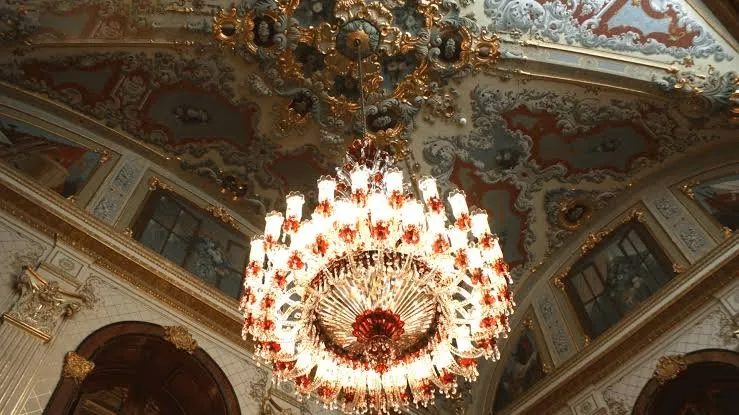
There is a moment in Dolmabahce when conversation stops. It usually happens the second people enter the Ceremonial Hall and look up.
First impression anatomy
- Vertical volume that resets your sense of proportion
- A chandelier that functions as both object and performance
- Light that shifts across surfaces as clouds pass outside
Reading the room as message
| Design element | Visual impact | Political meaning |
|---|---|---|
| Monumental scale | Awe | Sovereign continuity |
| Central chandelier | Focus point | Wealth and global connectivity |
| Symmetry | Order | Administrative legitimacy |
A simple way to experience it
- Stand still for 60 seconds before taking photos.
- Trace your eye from floor pattern to ceiling center.
- Notice how visitors instinctively slow down.
Tip: In this room, silence is part of the architecture.
Quick compare
Small room logicdoes not apply here.- This space works like a state stage, not a domestic salon.
- The chandelier is not decoration alone; it anchors narrative gravity.
If Dolmabahce is a novel, the Ceremonial Hall is its climactic chapter: bright, deliberate, and impossible to skim.
Beyond the wow moment
Most people remember the chandelier first, but the deeper memory usually comes from proportion. The room teaches your body to slow down because scale outpaces your normal way of looking.
Try this 90-second script
| Seconds | Focus |
|---|---|
| 0-30 | Look only at vertical height and ceiling structure |
| 30-60 | Shift to central light source and reflections |
| 60-90 | Read visitor movement as part of the scene |
Why this room works narratively
- It concentrates symbolic language into one visual climax.
- It confirms the palace's diplomatic self-image.
- It sets up a powerful contrast with quieter private rooms later.
Architectural grandeur is most effective when it controls tempo, not just scale.
When you leave the hall, notice how your voice, pace, and gaze have changed. That behavioral shift is one of the strongest indicators of successful ceremonial architecture.
About the Author

Istanbul Heritage Desk
This guide was written for travelers who want more than just a quick photo stop. Dolmabahçe deserves context: the stories of reform, ceremony, decline, and reinvention that shaped the final century of Ottoman power and left a remarkable architectural legacy on the Bosphorus.
Tags
Comments (0)
Loading comments...